Plant-Based Diets for Athletes Planner
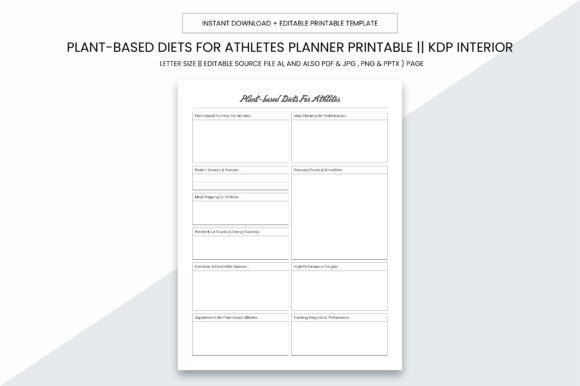
Athletes pursuing peak performance while aligning with ethical, environmental, or health-driven values increasingly turn to plant-based nutrition—but intention alone doesn’t guarantee consistency. The Plant-Based Diets for Athletes Planner bridges that gap. It’s not a generic meal journal or a static PDF guide. It’s a purpose-built, 109-page operational tool designed for real-world use: planning meals, tracking energy and recovery, logging training alongside nutrition, and refining habits over time. Whether you're an endurance runner, strength athlete, weekend competitor, or coach supporting plant-powered clients, this planner integrates seamlessly into your existing workflow—before training begins, during active cycles, and after competitions or seasonal resets.
How It Fits Into Your Daily and Seasonal Process
This planner works most effectively when treated as a living system—not a one-time checklist. Before a training block starts, use the goal-setting and macro-targeting pages to define realistic protein, iron, B12, and omega-3 benchmarks based on your sport, volume, and current intake. During weekly prep, fill in the meal templates with batch-cooked lentil stews, tofu scrambles, or soaked chia puddings—then cross-reference those with your workout schedule to ensure pre-fuel timing and post-recovery windows are covered. After each session, log subjective metrics like muscle soreness, digestion clarity, and mental focus—not just calories or grams. Over time, patterns emerge: maybe mid-week fatigue correlates with low zinc intake, or afternoon slumps improve after adding pumpkin seeds to breakfast.
Unlike apps that require constant connectivity or manual data entry across platforms, this planner consolidates inputs in one tactile, distraction-free space. No syncing delays. No subscription prompts. Just clear structure, intentional spacing, and room for notes that reflect how your body actually responds—not how an algorithm predicts it should.
Designed for Real Printing and Real Use
The Plant-Based Diets for Athletes Planner is built for action—not just aesthetics. Its practical 8.5 x 11 inch size fits standard binders, desk organizers, and local print shop trays without cropping or reformatting. With no bleed, every page prints cleanly, edge-to-edge, whether you’re printing at home on a laser printer or sending files to a commercial print provider. At 300 ppi, text remains razor-sharp and charts stay legible—even when photocopied for team handouts or laminated for kitchen wall reference.
For creators and small business owners using Kindle Direct Publishing (KDP), the interior is fully KDP-compliant: 109 pages of ready-to-upload PDF, formatted to meet Amazon’s trim and margin requirements. No reflowing, no guessing. Just upload, pair with your cover, and publish. That same PDF file also serves double duty—as a printable resource for coaches offering client onboarding packages, or as a downloadable bonus for email list subscribers building trust through tangible value.
Digital Flexibility Without Compromise
Beyond the final PDF, you receive editable source files: Adobe Illustrator (.ai), plus layered .PPTX, .JPG, and .PNG versions. This matters if you’re customizing content for specific audiences—say, adding your logo and branding to the cover for a fitness studio workshop, or adapting the nutrient tracker for vegan triathletes by inserting iron-rich food icons. The Illustrator file preserves vector scalability, so resizing a chart for a presentation slide or a poster doesn’t degrade quality. The PPTX version lets you repurpose pages as coaching decks—dragging a weekly meal grid directly into a client review session.
Because the files are editable, you retain full control over updates. If new research shifts protein recommendations for plant-based endurance athletes—or if you launch a 30-day challenge—you can revise a single template and regenerate all outputs instantly. No dependency on third-party tools or recurring licensing fees.
Workflow Integration: Where It Connects—and Where It Stands Alone
This planner doesn’t replace your nutrition app, but it complements it. Use MyFitnessPal to scan barcodes and log snacks, then transfer weekly totals into the planner’s summary dashboard to spot trends across seven days—not just isolated entries. Pair it with your training log: note when you swapped rice for quinoa before a long run and observed improved gut comfort. Cross-reference those observations with sleep tracker data (e.g., WHOOP or Oura) to see if plant-based dinner timing affects HRV scores.
For educators and wellness instructors, the planner functions as both teaching aid and student workbook. Assign the “Nutrient Gap Audit” page early in a course, then revisit it after three weeks of guided meal prep—letting learners compare self-assessments with lab values or symptom journals. Freelancers building digital products can extract individual pages—like the “Pre-Workout Snack Matrix”—as standalone lead magnets, knowing the design and typography remain consistent with their brand.
Long-Term Usability and Quality Control
Usability isn’t just about first impressions—it’s about durability across months and iterations. The planner avoids cluttered layouts or overly prescriptive columns. Blank side margins invite handwritten reflections. Consistent headers and color-coded sections (e.g., blue for hydration, green for whole-food sources) support quick visual scanning—critical when flipping pages mid-coaching call or post-workout. Page numbers and a hyperlinked table of contents in the PDF make navigation efficient, even when printed and bound.
Quality control starts with intention: every table has sufficient row height for legible handwriting; every checkbox is large enough for a stylus or pen tip; every nutrient column includes realistic ranges—not theoretical ideals—for plant-based athletes (e.g., “35–50g protein/day” instead of “40g”). There are no placeholder graphics or lorem ipsum text. Every element exists because it solves a documented pain point: inconsistent iron tracking, forgotten supplement timing, mismatched portion estimates, or vague “eat more plants” directives that lack execution scaffolding.
Practical Implementation Tips
- Start small: Don’t try to fill every page on Day One. Begin with the “Weekly Nutrition Snapshot” and one training day’s meal + symptom log. Build frequency only after the habit sticks.
- Batch-print quarterly: Print four copies at once—each representing a season. Athletes’ needs shift with training cycles; having fresh, dated planners prevents outdated assumptions from carrying over.
- Use the editable files for version control: Save variants as “V2_Endurance,” “V3_Strength,” or “V4_CoachKit” so you never overwrite core templates.
- Leverage the no-bleed design for hybrid use: Print key pages (like the “Supplement Timing Chart”) on cardstock and laminate them for kitchen or gym use—while keeping the full journal digital for remote coaching notes.
- Integrate with accountability: Share your completed “Recovery Reflection” page monthly with a coach or peer group—not for judgment, but to identify shared barriers (e.g., limited access to fortified nutritional yeast) and co-create solutions.
The Plant-Based Diets for Athletes Planner succeeds where many resources fail: it assumes you already understand the *why* of plant-based eating. Instead, it focuses relentlessly on the *how*—with precision, adaptability, and respect for your time. It’s built for people who don’t want another passive download, but a working document that evolves with their goals, their body, and their process.