Master Your Academic Journey with the Daily Study Planner
Staying organized isn’t just about checking off tasks—it’s about building consistency, reducing stress, and turning intention into action. For students juggling classes, assignments, extracurriculars, and personal commitments, a scattered approach to studying often leads to last-minute cramming, missed deadlines, and burnout. That’s where the Daily Study Planner steps in—not as another to-do list, but as a purpose-built system designed to support focus, reflection, and long-term academic growth.
What Is a Daily Study Planner—and Why Does It Matter?
A Daily Study Planner is a structured, intentional tool that helps students map out study time, prioritize learning goals, track progress, and reflect on what works—and what doesn’t. Unlike generic notebooks or digital calendars, it’s tailored specifically for academic success: each page supports habits like active recall, spaced repetition, goal-setting, and self-assessment.
Think of it as your personal academic coach—quiet, consistent, and always ready. Whether you’re a high school junior preparing for AP exams, a college freshman adjusting to independent learning, or a graduate student managing research alongside coursework, this planner meets you where you are. Its value lies not in complexity, but in clarity: clean layouts, intentional prompts, and space to think—not just write.
How the Daily Study Planner Transforms Student Habits
Many students assume productivity means doing more—but research shows that focused, intentional effort yields better outcomes than sheer volume. The Daily Study Planner reinforces this principle through design:
- Time-blocking over task-listing: Instead of vague entries like “study chemistry,” it guides users to assign specific topics, durations (e.g., “45 min: redox reactions”), and study methods (e.g., flashcards + practice problems).
- Goal anchoring: Each day begins with a clear “Focus Goal”—a single, measurable outcome (e.g., “Explain Newton’s Third Law using two real-world examples”). This builds confidence and reduces decision fatigue.
- Reflection built-in: End-of-day prompts ask: What helped me stay focused? What distracted me? What will I adjust tomorrow? Over time, this cultivates metacognitive awareness—the ability to think about how you learn.
Real-world example: A biology major used the planner to break down her MCAT prep into 30-minute concept blocks across six weeks. By tracking retention scores and energy levels daily, she identified mornings as her peak focus time—and shifted high-yield topics accordingly. She improved her practice test scores by 22% in eight weeks—not because she studied longer, but because she studied smarter.
Key Features That Make This Planner Stand Out
The Daily Study Planner isn’t just functional—it’s thoughtfully engineered for real student life. Here’s what sets it apart:
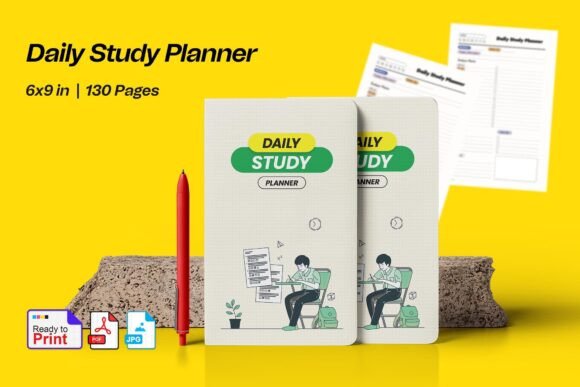
✅ Print-Ready PDF for Instant Use
No waiting for shipping or app downloads. With one click, you get a professional-grade PDF optimized for home printers—or tablets with stylus support. Print weekly spreads, keep them in a binder, or use them as standalone sheets. Flexibility without friction.
✅ Stylish, Motivational Cover Design
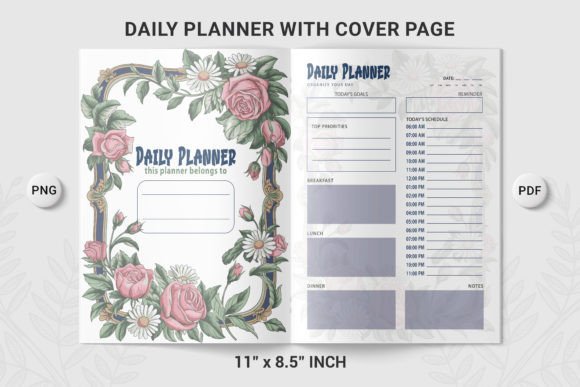
First impressions shape habits. A cover that inspires—clean typography, subtle academic motifs, and warm, confident colors—signals seriousness and self-respect. Every time you open it, you’re reminded: This is how I show up for my future.
✅ High-Quality JPEG Page Images
Need a quick digital reference? Each planner page is also provided as a crisp JPEG—ideal for annotating on devices, sharing study templates with peers, or embedding in digital notebooks like Notion or OneNote.
✅ Compact 6 x 9-Inch Size
Bulky planners get left behind. At 6 x 9 inches, this fits effortlessly into backpacks, laptop sleeves, or even large coat pockets. No more choosing between organization and portability.
✅ 130 Pages of Intentional Structure
That’s not filler—it’s function. Includes:
- Weekly overview pages with priority mapping
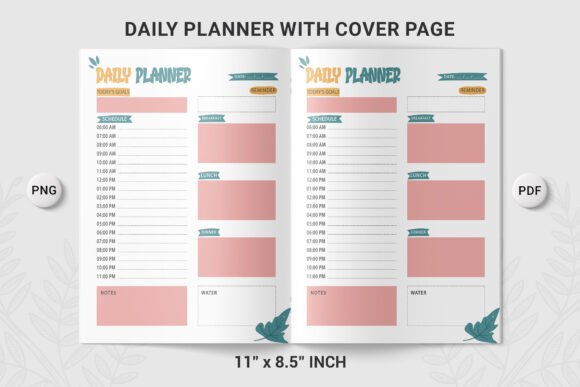
- Daily planning spreads (morning intention, focused blocks, evening review)
- Subject-specific trackers (for courses, labs, projects)
- Progress dashboards (completion %, streak counters, habit charts)
- End-of-week reflection templates
Why Students Choose This Planner Over Generic Alternatives
Generic planners often fail students because they assume uniformity: one-size-fits-all schedules, rigid time slots, or minimal academic context. But learning isn’t linear—and neither is student life.
This planner acknowledges reality: some days involve back-to-back lectures; others demand deep reading or creative writing. It accommodates asynchronous learning, hybrid classrooms, and project-based curricula. It doesn’t shame inconsistency—it helps you understand it.
And unlike many digital tools, it minimizes distraction. No notifications. No battery anxiety. Just paper, pen, and presence. Cognitive science confirms that handwriting boosts memory encoding and comprehension—making this low-tech tool surprisingly high-impact.
More Than Organization: Building Identity and Agency
Using a Daily Study Planner does more than manage time—it reshapes identity. When students consistently record goals, celebrate small wins (“Finished annotated bibliography!”), and revise strategies based on evidence—not emotion—they begin seeing themselves as capable, adaptable learners.
This shift matters beyond grades. Employers increasingly value self-management, initiative, and reflective practice—skills honed daily in the planner’s margins. In internships, group projects, or independent research, those who plan intentionally communicate clearly, meet deadlines reliably, and adapt quickly to feedback.
Common Misconceptions—Debunked
- “I’ll fall behind if I don’t fill every page.” → False. Blank space is strategic. The planner encourages quality over quantity—even 10 minutes of deliberate review counts. Consistency trumps completeness.
- “Digital tools are more efficient.” → Not always. While apps offer reminders and syncing, they lack tactile feedback and can fragment attention. This planner complements—not replaces—digital calendars (use it for deep work; use apps for alerts).
- “Only struggling students need planners.” → Incorrect. Top performers use planning systems too—they just do it silently. Elite athletes, researchers, and artists all rely on structured reflection. Planning is a skill of excellence, not remediation.
Your Next Step Toward Academic Confidence
Academic success isn’t reserved for the naturally disciplined or endlessly energetic. It belongs to those who build supportive systems—tools that align with how the brain learns, how motivation works, and how real life unfolds.
The Daily Study Planner is that system. It’s not about perfection. It’s about showing up—with intention, curiosity, and kindness toward your own growth. It’s about transforming “I should study” into “Here’s exactly how I’ll engage with this material today.”
Whether you're preparing for finals, balancing part-time work and coursework, or building study stamina for grad school, this planner gives you structure without rigidity, guidance without guilt, and motivation rooted in progress—not pressure.
Get your Daily Study Planner now—and take the first step toward a calmer, clearer, more confident academic year.