Password Tracker Password Keeper Bleed
Managing credentials across dozens—or sometimes hundreds—of accounts isn’t just tedious. It’s a quiet operational risk. Every reused password, every sticky note on a monitor, every unencrypted spreadsheet weakens your personal security posture and undermines professional credibility. The Password Tracker Password Keeper Bleed addresses this not as a novelty, but as a deliberate tool for disciplined information stewardship: a physical, printable, professionally formatted log designed for people who value both control and clarity.
Why a Printed Password Tracker Still Matters in a Digital World
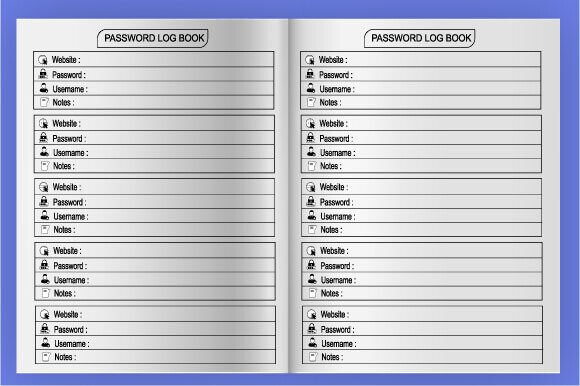
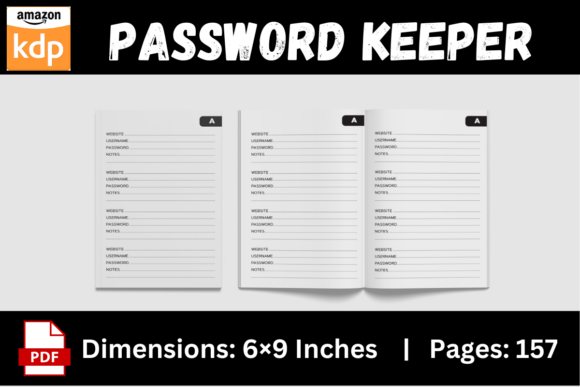
Digital password managers excel at encryption, autofill, and cross-device sync—but they assume stable infrastructure, consistent access, and trust in third-party platforms. When internet outages occur, when devices fail, or when you’re auditing access during onboarding or offboarding, a reliable analog complement becomes strategic. The Password Tracker Password Keeper Bleed fills that role with intentionality: its 6×9 inch format fits neatly in a desk drawer or portfolio; its 157-page interior provides room for growth without clutter; and the bleed-enabled design ensures clean, professional edges after printing—no accidental white borders or cropped headers.
This isn’t about rejecting digital tools. It’s about layering resilience. A printed tracker serves as a verified backup for critical credentials—your domain registrar, primary email recovery keys, business banking portals, or client-facing SaaS accounts where MFA isn’t available. It also supports transparency in team environments: a shared, physically secured binder (stored in a locked cabinet, not left open on a desk) can streamline handovers without exposing raw passwords in Slack or email.
Strategic Use Cases Across Roles
How you use the Password Tracker Password Keeper Bleed depends less on what it is—and more on what you’re trying to protect, delegate, or document.
- Freelancers & solopreneurs: Track client-specific logins (CMS, hosting, design tools), retain notes on preferred two-factor methods or recovery steps, and annotate expiration dates for trial accounts. One page per client keeps context intact—no more digging through browser history or old emails.
- Educators & course creators: Maintain access to LMS platforms, webinar tools, licensing portals, and student feedback systems. Add account notes like “Use school-issued Google Workspace” or “Reset password before semester starts”—details easily forgotten but operationally essential.
- Small business owners: Separate administrative, financial, and marketing credentials—not by platform, but by function and access level. Reserve early pages for high-stakes accounts (banking, payroll, tax filing), and later sections for vendor portals (shipping, utilities, insurance). This structure supports delegation: you assign responsibility without sharing full access.
- Content publishers & bloggers: Log submission portals, ad network dashboards, affiliate program credentials, and media kit distribution logins. Include notes like “Password resets quarterly” or “Shared with editor via 1Password share link”—blending analog recordkeeping with digital workflows.
Design Decisions That Support Discipline
The inclusion of bleed isn’t cosmetic—it’s functional. Printers trim paper to final size, and without bleed, slight misalignment results in visible white edges or clipped text near margins. The Password Tracker Password Keeper Bleed includes 0.125-inch bleed on all sides, ensuring headers, dividers, and page numbers remain fully visible after trimming. That attention to detail signals reliability: if the layout respects precision in print, it invites the same care in use.
Each page offers dedicated fields—not just for username and password, but for URL, account type, creation date, last update, and customizable notes. That last field is where strategy lives. Instead of writing “Don’t forget to renew,” you might write “Renew before March 15; auto-bill enabled.” Instead of “Client login,” you specify “Jane Doe LLC – WordPress admin, staging only.” These small additions transform passive storage into active governance.
When and How to Integrate It Thoughtfully
Start with triage—not transcription. Before filling pages, identify your top 10–15 most consequential accounts: those tied to identity, money, legal compliance, or business continuity. Prioritize those first. Then ask: does this credential require frequent changes? Is it shared? Does it have unique security requirements (e.g., hardware key only)? Let those answers guide how deeply you annotate each entry.
Update rhythm matters more than frequency. Set a recurring 15-minute slot—biweekly works for most professionals—to review, verify, and revise. Cross-check against your digital password manager. Flag entries where passwords haven’t changed in over a year. Note where MFA is missing. Use the tracker not as a static archive, but as a lightweight audit surface.
Store it deliberately. Keep it in a location with controlled physical access—not on a shelf visible from the door, not inside an unlocked laptop bag. If used in a team setting, designate one person responsible for maintaining accuracy and version control (e.g., “v2.1 – updated June 12”). Avoid scanning or photographing filled pages unless encrypted and access-controlled—digital copies reintroduce the risks the printed format was meant to mitigate.
Risks of Using It Without Context
A password tracker becomes dangerous when treated as a convenience rather than a responsibility. Leaving it open on a desk, failing to redact sensitive details in shared environments, or using vague labels (“Work Email”) instead of precise identifiers (“Gmail – admin@mybusiness.com, 2FA via Authy”) erodes its utility and increases exposure.
Equally risky is treating it as a replacement for sound password hygiene. The Password Tracker Password Keeper Bleed doesn’t generate strong passwords—it records them. If your underlying credentials are weak, predictable, or reused, the tracker simply documents vulnerability. Its value multiplies only when paired with deliberate practices: unique passwords per account, regular rotation for high-risk services, and verification that recovery options remain current.
Long-Term Value Beyond Security
Over time, this tracker reveals patterns. You’ll notice how many accounts rely on the same recovery email—or how often you reset passwords for tools you rarely use. That data informs decisions: consolidating platforms, sunsetting unused subscriptions, or investing in better onboarding documentation for new team members.
It also strengthens institutional memory. When a contractor leaves or a team member takes leave, their access history isn’t trapped in fragmented messages or half-remembered conversations. The tracker provides a neutral, auditable reference—reducing friction, minimizing downtime, and preserving continuity.
For educators building curriculum around digital literacy, it’s a tangible teaching aid: a concrete example of how information architecture supports real-world outcomes. For creators documenting workflows, it demonstrates how intentional tool selection reinforces professionalism—not just in output, but in process.
Making It Work for Your Workflow
The downloadable PDF is ready to print—no editing required. But customization adds leverage. Use the blank note fields to embed internal protocols: “Change after every client project,” “Verify with finance before sharing,” or “Requires dual approval for access.” Add color-coded tabs for categories (Financial, Client-Facing, Internal Tools). Or bind multiple copies—one for home, one for office—with clear version dating.
Most importantly: treat it as a living artifact. Revisit structure quarterly. Ask whether page allocations still match your usage. Consider adding a summary index at the front if your count exceeds 50 entries. Let the tool evolve alongside your needs—not the other way around.
The Password Tracker Password Keeper Bleed won’t eliminate complexity. But it reduces noise. It replaces uncertainty with visibility. And in an environment where attention is scarce and consequences compound, that kind of grounded, printable clarity isn’t nostalgic—it’s necessary.