Minimalist Monthly 2025 Calendar
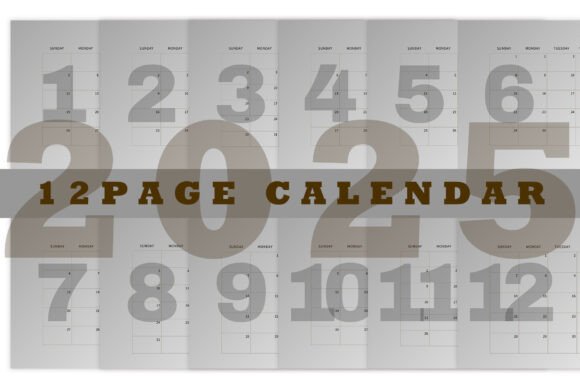
If you’re tired of cluttered planners, overwhelming digital notifications, or calendars that compete for attention instead of supporting focus—this is the quiet reset you’ve been looking for. The Minimalist Monthly 2025 Calendar isn’t another flashy productivity tool. It’s a purpose-built, 12-page visual framework designed for clarity first, function second, and aesthetics as a natural byproduct—not an afterthought.
Created with intentionality in mind, it serves professionals who juggle client deadlines and internal projects, educators mapping semester rhythms, freelancers balancing multiple income streams, and creators protecting deep work time. Its strength lies not in what it adds—but in what it removes: no distracting icons, no forced color schemes, no redundant fields. Just clean space, clear typography, and intelligent structure—all optimized for real-life use at 1920 × 1080 resolution.
What Makes This Calendar Distinctly Practical
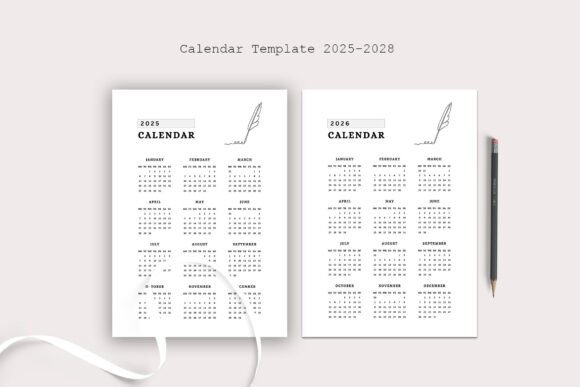
This isn’t a generic stock template. Every page represents one month of 2025, laid out with consistent alignment, balanced margins, and generous white space—enough to write key priorities, block time visually, or annotate without crowding. The non-editable version ensures design integrity across devices and platforms, eliminating formatting surprises when shared or printed.
The inclusion of both JPG and PDF formats gives flexibility without compromise: JPGs for quick social sharing, email headers, or digital wall displays; PDFs for high-fidelity printing, embedding into presentations, or integrating into branded resource kits. And because the preview image is separate from the main file, what you download is exactly what you use—no guesswork, no hidden layers.
Where It Fits Naturally Into Your Workflow
For remote teams and solopreneurs: Use the JPG version as your desktop background or virtual meeting backdrop. A subtle, professional calendar behind your video feed signals organization without shouting about it. No need to toggle apps mid-call—just glance and stay grounded in the month’s rhythm.
In education and training: Educators embed the PDF into learning management systems or print single-month pages as handouts for goal-setting workshops. Students appreciate the breathing room to map assignments, exams, and personal commitments side-by-side—without cognitive overload.
For content creators and marketers: Align campaign milestones, content drops, and analytics reviews directly onto the calendar grid. Because it’s minimalist, it doesn’t fight your brand colors or fonts—it complements them. Drop it into Canva, pair it with your logo, and turn planning into part of your visual identity.
For small business owners and service providers: Print one month at a time and keep it on your desk next to your notebook. Use it to batch similar tasks—client calls on Tuesdays, admin on Fridays—or to spot capacity gaps before they become crises. Its fixed layout means no accidental edits mid-month, so your plan stays intact.
Design Choices That Support Real Human Behavior
Notice how the date numbers are large but not dominant? How weekends are subtly differentiated—not with bold colors, but with gentle spacing or light tonal shifts? That’s intentional. Research shows excessive visual contrast increases decision fatigue. This calendar uses restraint to reduce mental load, letting your brain focus on *what* matters—not *how* to read the page.
The 1920 × 1080 size isn’t arbitrary. It matches standard widescreen monitors, making it ideal for dual-monitor setups where one screen holds your work and the other holds time context. It also scales cleanly for tablets used in studios, classrooms, or co-working spaces—no pixelation, no cropping.
Realistic Considerations Before You Use It
Because it’s non-editable, this version works best when you prefer writing by hand, using annotation tools (like Adobe Acrobat or GoodNotes), or layering digital sticky notes over the JPG. If you rely heavily on auto-populating events from Google Calendar or Outlook, treat it as a complementary overview—not a syncable hub. Think of it as your monthly “anchor,” not your daily “engine.”
Also, while the clean aesthetic supports branding, remember: minimalism only works when paired with intention. Don’t just drop it into a slide deck because it looks nice—ask first: *Does this help my audience orient faster? Does it clarify timing without explanation?* If yes, it earns its place.
How It Builds Better Habits—Without Saying a Word
Minimalist design doesn’t mean low-value design. In fact, the Minimalist Monthly 2025 Calendar encourages better time awareness simply by removing noise. When there’s no default reminder system or pop-up, you’re more likely to pause and reflect: *What’s actually due this week? What can wait? What deserves space—and what doesn’t?*
Freelancers report fewer scope-creep moments when reviewing client timelines against this calendar—they see gaps and overlaps instantly. Bloggers use it to stagger content themes across months, avoiding topic fatigue. Even hobbyists—like photographers planning seasonal shoots or writers outlining quarterly projects—find it easier to honor creative cycles when the structure supports patience, not pressure.
A Tool That Grows With Your Needs
You don’t need to overhaul your entire system to benefit. Start small: print January and keep it beside your laptop. Use it to block “focus hours” before checking email. Try color-coding categories with fine-tip pens—blue for client work, green for learning, red for rest. Or go monochrome and let the structure do the work.
Over time, you’ll notice patterns: recurring energy dips, predictable bandwidth peaks, even how your best ideas align with certain weeks. That insight doesn’t come from features—it comes from consistency, clarity, and calm.
Sree Rajib Howlader built this not as a one-size-fits-all solution, but as a thoughtful starting point—one that respects your time, your taste, and your right to plan without performance anxiety. Whether you’re launching a course, managing a team, studying for certifications, or simply trying to protect Saturday mornings—the Minimalist Monthly 2025 Calendar meets you where you are, then quietly helps you move forward with less friction.
It won’t send notifications. It won’t track habits. It won’t gamify your progress. But it will hold space—for planning, reflection, and the kind of focused presence that modern work so often sacrifices.