Handwriting Worksheet: A Practical Tool for Real-Life Learning and Growth
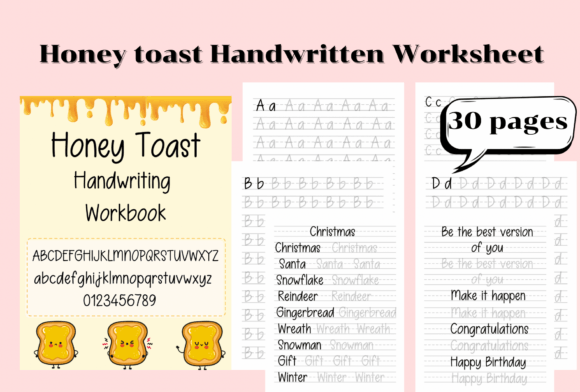
Whether you're relearning cursive after years of typing, helping your 7-year-old form letters with confidence, or guiding a teen through handwriting rehabilitation after an injury, the Handwriting Worksheet meets you where you are. It’s not just another printable PDF—it’s a 30-page, thoughtfully structured resource designed for both kids and adults, sized at standard 8.5 × 11 inches, and ready to use on paper or in Procreate. What makes it stand out isn’t its format, but how seamlessly it fits into everyday life—no teaching degree required, no special setup needed.
Where This Handwriting Worksheet Fits Into Real Life
Think about the last time you wrote something by hand: a thank-you note, a grocery list, a journal entry, or even signing an important document. Now imagine doing that with more control, less fatigue, and greater clarity. That’s the quiet impact this Handwriting Worksheet supports—not as a one-time fix, but as gentle, consistent practice woven into routines you already have.
For adults, it shows up in unexpected places. A graphic designer might use the guided letter-spacing pages to sharpen their hand-lettering skills before sketching a client logo. A teacher recovering from wrist strain may start with the low-pressure tracing drills before returning to grading papers. A new parent learning alongside their child discovers shared progress—practicing lowercase 'g' together builds connection *and* muscle memory.
Kids benefit just as organically. Not every child learns best through screens, and not every classroom has time for individualized handwriting instruction. With this Handwriting Worksheet, a 5-year-old can trace dotted letters while sitting at the kitchen table, a 9-year-old can refine slant and size consistency during homework time, and a 12-year-old preparing for standardized tests can build speed and legibility without monotony.
Different Needs, Same Thoughtful Design
The beauty of this Handwriting Worksheet lies in its adaptability—not because it tries to be everything, but because it respects how varied real-world needs truly are.
- Therapists & Educators: Use it as a flexible supplement—not a curriculum replacement. The progression from basic strokes to connected cursive allows customization based on motor development, attention span, or sensory preferences. One occupational therapist told us she laminates select pages for dry-erase reuse during sessions, while another prints single pages for home carryover assignments.
- Remote Learners & Homeschool Families: When screen fatigue is high and fine motor practice is low, having a tactile, screen-free activity ready in seconds makes a difference. Parents appreciate that they don’t need to “teach” handwriting—they simply print, grab a pencil (or open Procreate), and follow the flow.
- Adults Rebuilding Confidence: Whether due to dysgraphia, stroke recovery, or years of keyboard reliance, many adults hesitate to write by hand in front of others. This Handwriting Worksheet offers private, judgment-free space to rebuild. The clean layout, generous line spacing, and gradual difficulty curve reduce overwhelm—no red pens, no timed drills, just steady, kind repetition.
- Creative Professionals: Calligraphers, lettering artists, and even UX designers exploring analog ideation find value in the deliberate formation exercises. Slowing down to shape each letter consciously sharpens visual awareness and spatial reasoning—skills that translate directly to digital work.
What to Keep in Mind Before You Begin
This Handwriting Worksheet works best when matched to intention—not perfection. Here’s what users often notice once they get started:
- Pacing matters more than volume. One page a day, done mindfully, yields better results than rushing through five. The design intentionally avoids clutter or excessive instructions—so you can focus on movement, not decoding directions.
- Tool choice changes the experience. Using a soft pencil on printer paper feels different than a fine-tip stylus on an iPad. Some adults prefer Procreate for instant erasing and layer flexibility; others love the physical feedback of pencil-on-paper. Neither is “better”—just different entry points.
- It’s built for repetition, not rigidity. You’re welcome to skip pages, revisit earlier ones, or mix sections (e.g., combine letter formation with spacing drills). There’s no test at the end—just observable shifts over time: smoother transitions between letters, steadier pressure, fewer crossed-out words.
- Personal and commercial use means real flexibility. If you’re a tutor creating custom lesson packets, a small business owner designing branded stationery, or a parent sharing tips in a local parenting group—you’re covered. No extra licensing hoops.
Strengths That Show Up in Practice
What users consistently highlight isn’t just “it works,” but *how* it works in context:
- No assumptions about prior knowledge. From pre-writing shapes (circles, lines, curves) to full cursive sentences, the sequence honors developmental logic—not grade-level expectations.
- Visual clarity supports independence. High-contrast lines, uncluttered margins, and intuitive arrow cues mean learners as young as 5—and adults with visual processing sensitivities—can navigate pages without constant guidance.
- It invites joy, not drudgery. Subtle design choices—like playful yet functional fonts, balanced white space, and rhythmic progression—make practice feel like engagement, not endurance.
- Works offline and online. Whether your internet drops mid-lesson or you’re sketching on a train, the PDF stays reliable. And because it’s optimized for Procreate, digital users get crisp lines and smooth zoom—no pixelation or lag.
A Few Gentle Considerations
Like any tool, this Handwriting Worksheet shines brightest when used with awareness—not as a standalone solution, but as part of a broader support system. For children with significant motor delays or diagnosed learning differences, pairing it with professional guidance ensures alignment with individual goals. Adults managing chronic pain or neurological conditions may benefit from adapting grip or duration—listening to the body matters more than completing a page. And while the worksheet includes diverse letter styles (manuscript, D’Nealian, cursive), it doesn’t cover every regional variation (e.g., British vs. American ‘a’ or ‘g’)—so users with specific stylistic needs may want to supplement selectively.
More Than Lines and Letters
At its core, this Handwriting Worksheet is about reclaiming agency over how we communicate—slowly, deliberately, and humanly. It’s for the college student who wants notes that are easier to review later. For the grandparent writing letters to grandchildren across the country. For the adult who hasn’t held a pen comfortably in years—and wonders if they still can. It’s not flashy. It doesn’t promise overnight transformation. But it does offer something increasingly rare: space to grow, quietly, without performance pressure.
You’ll receive your 30-page PDF instantly—ready to print, annotate, or load into Procreate. No subscriptions. No hidden steps. Just thoughtful design, grounded in how people actually learn, adapt, and create—across ages, abilities, and intentions.