Editable 2025 Therapy Journal Interior: Your Flexible, Real-World Mental Wellness Companion
If you’ve ever stared at a blank journal page wondering where to start—or worse, abandoned one after two weeks because it didn’t fit *your* rhythm—you’re not alone. The Editable 2025 Therapy Journal Interior isn’t another static PDF you print and forget. It’s a living, adaptable toolkit designed for how people actually manage mental wellness in real life: mid-day between client calls, during a quiet coffee break, or late at night when thoughts won’t settle.
What makes it different? You don’t need design skills—or even a paid subscription—to personalize it. With a free Canva account, you can open the editable link, change colors, swap prompts, adjust layouts, or even translate a section into your preferred language. And when you’re ready to use it, you’ll get high-quality, print-ready files: crisp 300 DPI PDFs for printing, JPEGs for quick digital reference, and PNGs with transparent backgrounds if you want to drop pages into presentations or social media posts.
Where and When This Journal Fits Into Real Life
Think about your typical Tuesday. Maybe you’re a freelance graphic designer juggling deadlines, a teacher prepping lessons while managing burnout, or a small business owner tracking both sales goals and sleep patterns. The Editable 2025 Therapy Journal Interior meets you there—not in theory, but in action.
For example, the Medication Tracker and Sleep Tracker aren’t just grids. They’re designed to be glanced at in under 30 seconds—perfect for logging something right after your morning pill or before turning off your bedside lamp. The Mood Tracker uses simple color-coding and short descriptors (not clinical jargon), so you can record how you feel without overthinking it. And because it’s editable, you can rename “Mood” to “Energy Level” or “Focus Today” if that resonates more with your experience.
The Crisis Prevention Plan and Coping Strategies pages are intentionally structured for clarity under stress—not polished perfection. You can add your therapist’s number, name three grounding techniques that work *for you*, or paste a photo of your safe place. No templates force you into rigid categories. If “distraction” helps you reset, the Distraction Tracker lets you log what worked (a podcast episode? A 10-minute walk? Reorganizing a drawer?)—so you build evidence of what truly supports you.
Who Uses This—and Why It Sticks
Creators and educators often repurpose journal pages as teaching tools. One yoga instructor uses the Thought Patterns and Decatastrophizing spreads to guide group reflection in workshops. She edits the prompts to match her students’ language—replacing “cognitive distortion” with “what’s my brain telling me right now?”—then exports clean PNGs to share in her private Slack channel.
Entrepreneurs and solopreneurs rely on the Stress Management and My Stress Factors pages to spot patterns across quarters. Instead of guessing why Q3 felt overwhelming, they cross-reference notes from the Activity List and Sleep Tracker. Over time, they notice trends—like lower mood scores the week after back-to-back Zoom marathons—and adjust scheduling proactively.
Hobbyists and everyday users appreciate the Gratitude Log and What Am I Grateful For pages because they’re low-pressure. No daily essays required—just space for three specific things (“the way light hit the wall this morning,” “my neighbor waved,” “I remembered to water the herbs”). The editable format means you can delete or duplicate these pages based on what feels sustainable—not what a productivity guru says you “should” do.
How It Works Behind the Scenes
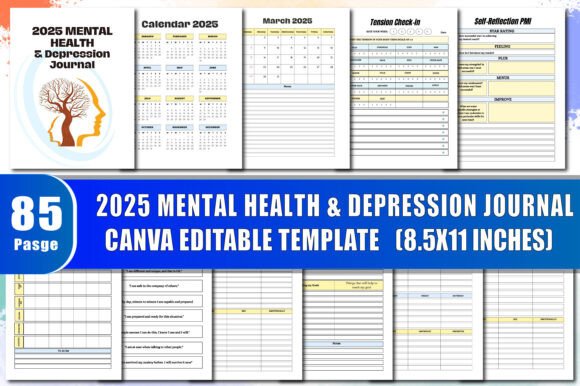
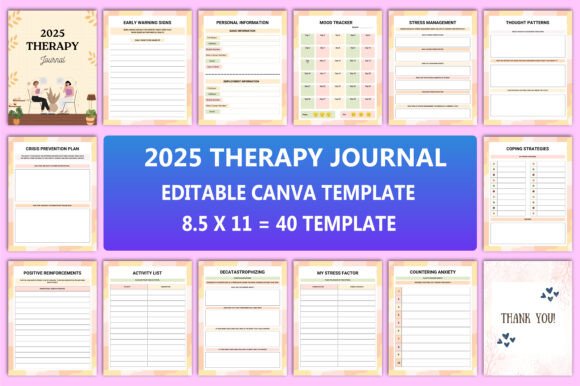
This isn’t a one-size-fits-all download. It includes 40 unique Canva template pages, all sized at 8.5 x 11 inches with no bleed and optimized at 300 DPI—so whether you’re printing at home or sending to a local print shop, text stays sharp and colors stay true. Each page is built with clear layers and labeled sections, making editing intuitive even if you’ve never used Canva before.
You’ll also find practical extras like the Belongs To Page (handy for therapists lending journals to clients), the Personal Information spread (with room for emergency contacts, allergies, and care preferences), and the Positive Reinforcements section—designed not as vague affirmations, but as concrete reminders of what you’ve already handled well (“I asked for help last week,” “I took a full lunch break on Tuesday”).
What to Consider Before You Use It
First: this works best when you treat it like a tool—not a test. You don’t have to fill every tracker every day. Many users start with just two pages: the Mood Tracker and Notes. That’s enough to begin noticing patterns without pressure.
Second: consider your access. Since editing happens in Canva, you’ll need internet access to open and customize the file—but once edited, you can download and use offline. If you prefer handwriting, the PDFs print cleanly on standard paper; if you journal digitally, the high-res JPEGs work smoothly in note-taking apps like GoodNotes or Notability.
Third: think about privacy. While the journal is yours to edit and store however you choose, avoid saving sensitive personal data (like crisis plans) in unsecured cloud folders unless encrypted. Some users export final versions as password-protected PDFs—or keep printed copies in a locked drawer.
Real Outcomes—Not Just Features
Here’s what users consistently report: less mental clutter, clearer self-awareness, and more confidence in responding—not reacting—to stress. A blogger noticed her Anxiety Countering page helped her pause before sending emotionally charged emails. A nurse used the Early Warning Signs and Coping Strategies combo to recognize fatigue cues *before* reaching emotional overload on shift. A student revised the Change Your Mindset page into a “Study Confidence Builder” and kept it pinned above her desk.
None of those outcomes came from filling out a perfect journal. They came from having a resource flexible enough to grow with their needs—and reliable enough to trust with honest, imperfect reflection.
Thank you for visiting my product. If you like this product then, Don’t forget to visit my store.