2025 Mental Health Self Care: Your Compass for Calm, Clarity, and Consistent Growth
Self-care isn’t indulgence—it’s infrastructure. In 2025, as digital fatigue deepens and collective stress remains elevated, intentional mental wellness has shifted from optional to essential. The 2025 Mental Health Self Care toolkit meets this moment with grounded practicality: a thoughtfully curated collection of printable and editable resources designed not to overwhelm, but to anchor daily habits, reflect meaningfully, and gently rewire how we relate to ourselves.
More Than a Planner—A Responsive Wellness System
This isn’t a static calendar or a generic journal. The 2025 Mental Health Self Care suite functions as a responsive ecosystem—12 distinct, interlocking templates that adapt to your rhythm, energy, and evolving needs. Each page serves a specific psychological function: reducing decision fatigue, externalizing mental clutter, reinforcing agency, or nurturing self-compassion. Unlike broad-brush wellness apps, these tools meet users where they are—whether recovering from burnout, managing chronic conditions, launching a creative project, or simply rebuilding routines after life disruption.
What’s Inside: Purpose-Built Templates for Real Life
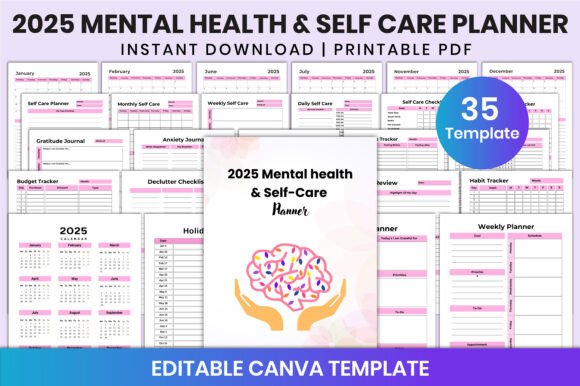
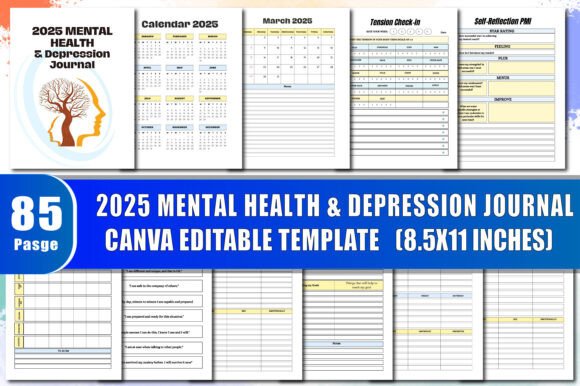
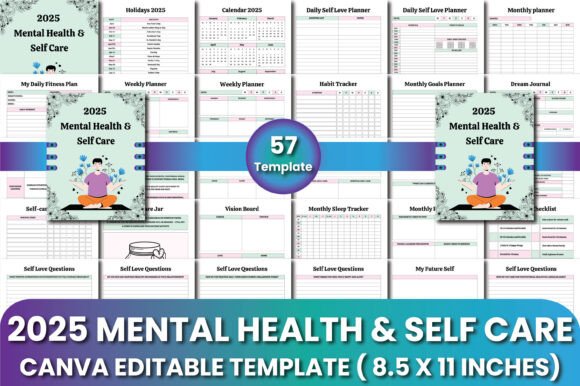
The 57-page collection includes:
- Calendar 2025 (12 pages) — With U.S. federal holidays pre-marked and clean spacing for personal observances, boundaries, and rest days—not just obligations.
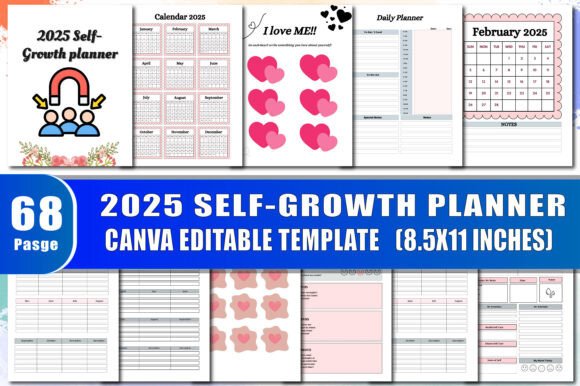
- Daily Self Love Planner (2 pages) — A gentle two-column layout prompting micro-affirmations and sensory grounding before diving into tasks.
- Habit Tracker + Weekly Planner — Paired layouts that link behavior change to weekly intention—not just “did I do it?” but “how did it serve me?”
- Dream Journal & Brain Dump Planner — Separate spaces for subconscious processing (no editing, no judgment) and conscious mental decluttering (prioritization, delegation, release).
- Monthly Sleep Tracker + Gratitude Journal — Visual correlation between rest quality and emotional tone, encouraging pattern awareness over perfection.
- Reframe Negative Thoughts + Self-Care Practice Sheets — Guided prompts using CBT-informed language—simple, non-clinical, and actionable.
- Vision Board + My Future Self + Monthly Reflection — Tools that bridge aspiration with accountability, inviting future-self thinking without pressure.
- Medication Tracker, Medical Appointment Log, Measurement Tracker — Designed for dignity and clarity—not clinical coldness—with space for notes on side effects, mood shifts, or questions for providers.
- Self-Care Jar + Self-Care Checklist — Tangible, joyful ways to personalize care—no “shoulds,” only what truly replenishes *you*.
Who Benefits—and Why It Fits So Many Lifestyles
The 2025 Mental Health Self Care toolkit speaks across roles—not because it’s generic, but because its design honors diversity in need and capacity.
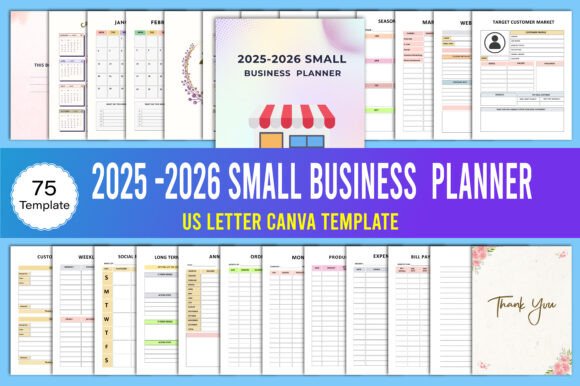
Professionals and entrepreneurs use the Business Planner (8.5x11 inches) and To Do List + Important Notes pages to separate urgent from meaningful work—reducing cognitive load while protecting mental bandwidth. The My Fear Rating sheet helps surface hidden blockers before they stall progress.
Creatives and educators lean into the Dream Journal, Vision Board, and Tips for Getting Better in Life pages—not as vague inspiration, but as scaffolding for sustainable output amid emotional labor.
Students, caregivers, and those in recovery find relief in the Monthly Goals Planner and Self-Care Tracker. Progress isn’t measured in milestones alone, but in consistency, gentleness, and noticing small wins—like drinking water, pausing before reacting, or honoring a “no.”
Even therapists and coaches integrate select pages—like the Reframe Negative Thoughts or Self-Love Questions—into client toolkits, appreciating their accessibility and evidence-aligned framing.
Designed for Real-World Use—Not Just Aesthetic Appeal
This isn’t digital wallpaper. Every element is tested for function:
- Print-ready PDFs — CMYK color mode, 300 DPI resolution, no bleed, optimized for Amazon KDP and home printers. Crisp text, legible fonts, and intentional white space ensure readability—not eye strain.
- Editable Canva Link — Fully customizable: change colors, swap fonts, add logos, translate sections, or adjust layouts—all without design expertise. No software downloads. No subscription required beyond free Canva access.
- Modular by design — Print only what you need, when you need it. Skip the sleep tracker in high-energy months; revisit the gratitude journal during transition. Flexibility is built in—not an afterthought.
Strengths That Stand Out
• Psychologically informed, not prescriptive: No toxic positivity. Pages validate struggle while offering gentle structure.
• No assumptions about capacity: Habit trackers include “partial effort” checkboxes. Reflection prompts ask “what was *possible* today?” not “what did you achieve?”
• Privacy-first: All tracking stays offline unless you choose to share. No data harvesting, no login walls.
• Accessible formatting: High-contrast options, clear hierarchy, and ample writing space accommodate ADHD, anxiety, low vision, and executive function differences.
Real Scenarios Where It Makes a Difference
A freelance designer uses the Weekly Planner alongside the My Daily Fitness Plan to align movement with creative flow—not rigid scheduling. When deadlines pile up, she opens the Brain Dump Planner for 90 seconds, then checks the Self-Care Jar for a quick reset—like stepping outside or listening to one favorite song.
A nurse returning from medical leave relies on the Medication Tracker and Monthly Sleep Tracker to spot correlations between rest, medication timing, and emotional resilience—information she shares with her provider to refine care.
A parent navigating a child’s diagnosis fills the Important Notes and Notes Files pages with questions, observations, and resources—transforming overwhelm into organized advocacy.
Thoughtful Considerations Before You Begin
While powerful, the 2025 Mental Health Self Care toolkit works best when aligned with realistic expectations:
- It supports—but doesn’t replace—clinical care. If you’re experiencing persistent depression, anxiety, trauma symptoms, or suicidal thoughts, please reach out to a licensed mental health professional. These tools complement care—they don’t substitute for it.
- Consistency > completion. You don’t need to fill every page daily. Even using one template—like the Gratitude Journal three times a week—builds neural pathways for resilience.
- Customization is part of the practice. If a prompt feels jarring, rewrite it. If a tracker adds stress, pause it. Your relationship with these tools should feel like collaboration—not compliance.
Your Next Step: Simple, Immediate, Supportive
You’ll receive two key assets instantly: a print-ready PDF file—professionally formatted, KDP-tested, and ready to print at home or order as a bound journal—and an editable Canva link giving you full creative control. Both are yours to keep, adapt, and reuse across years.
Whether you're seeking structure after chaos, building habits with kindness, or simply wanting to show up for yourself with more presence—the 2025 Mental Health Self Care toolkit offers more than pages. It offers permission: to slow down, to notice, to adjust, and to honor your mind as the vital, dynamic, worthy space it is.