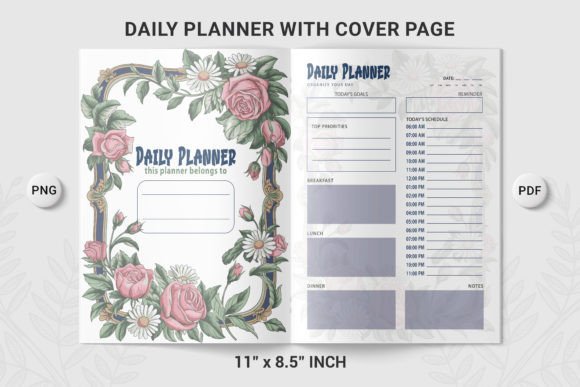
Daily Journal Note Book Cover: A Practical Guide for Thoughtful Design Selection
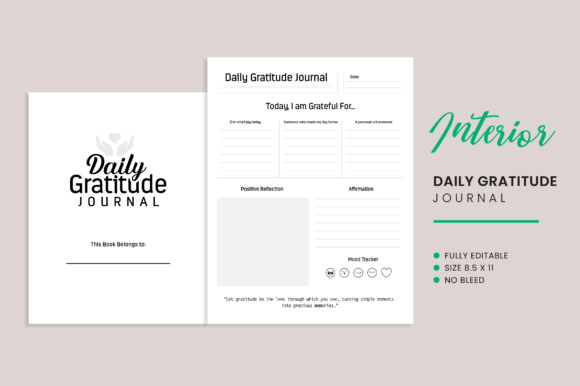
A Daily Journal Note Book Cover is more than a decorative layer—it’s the first functional and aesthetic interface between your journaling practice and the physical or printed object you hold. Unlike generic notebook covers or templated digital assets, this specific design resource is delivered as an editable EPS file, paired with high-resolution PDF and JPG versions optimized for professional printing and digital preview. Its purpose is to support intentional, personalized journal use—whether for reflection, planning, habit tracking, or creative documentation—while offering flexibility in production and adaptation.
What Sets This Daily Journal Note Book Cover Apart
The defining feature lies in its format ecosystem: the editable EPS file gives designers, small publishers, or DIY journal creators full vector control—allowing adjustments to color schemes, typography, layout spacing, or even integration of custom illustrations or logos. The included PDF files maintain precise CMYK color profiles and bleed settings required for offset or print-on-demand services. Meanwhile, the high-resolution JPGs serve as reliable previews, mockup placeholders, or web-ready visuals without compromising clarity.
This contrasts with static cover templates found on many design marketplaces, which often ship only as flattened PNGs or low-res JPEGs unsuitable for commercial print. It also differs from fully proprietary journal apps or pre-bound notebooks where customization ends at the purchase screen. Here, the Daily Journal Note Book Cover sits in a middle ground: structured enough to provide immediate usability, yet open enough to accommodate individual workflows and brand consistency.
How It Compares Across Common Alternatives
When evaluating options for journal cover design, three broad categories typically emerge:
- Pre-printed physical notebooks: These offer convenience and tactile quality but no adaptability. You’re locked into the publisher’s paper stock, binding method, and cover artwork. If your goal is consistency across a series—or alignment with a specific visual identity—this route limits iteration.
- DIY digital templates (non-editable): Many free or low-cost resources deliver JPG or PNG covers sized for common notebook dimensions. While accessible, they lack scalability—zooming in reveals pixelation—and prevent meaningful edits. Changing a single hex code or repositioning a title requires external image editing software and risks quality loss.
- Fully custom design from scratch: Hiring a designer or building a cover in Illustrator or Affinity Designer offers maximum control—but demands time, budget, and design literacy. For someone launching a small journal line or updating seasonal editions, that overhead may not scale efficiently.
The Daily Journal Note Book Cover occupies a pragmatic niche between those poles. It reduces the technical barrier of vector design while preserving fidelity and flexibility. Think of it as a “designed foundation”: professionally composed, print-ready, and ready for refinement—not a finished product, but a responsibly scaffolded starting point.
Strengths in Real-World Use
Its strengths become most visible in scenarios where consistency, iteration, and output control matter:
- A wellness coach creating quarterly reflection journals for clients can adjust the cover’s accent color to match each season’s theme—using the EPS file—then export fresh PDFs for their printer without redesigning from zero.
- An indie stationery brand testing two cover variants for a Kickstarter campaign can quickly generate side-by-side mockups using the JPGs, then finalize the winner in EPS before sending final files to manufacturing.
- A teacher developing classroom journaling resources can add school initials or grade-level identifiers directly into the vector file, ensuring crisp reproduction whether printed on 8.5"×11" sheets or scaled for A5 spiral-bound books.
In each case, the Daily Journal Note Book Cover shortens the path from idea to tangible artifact—without sacrificing professional output standards.
Tradeoffs and Limitations to Consider
No resource fits every context. Key limitations include:
- No built-in interior layouts: This is strictly a cover asset. Users still need to source or design lined, dotted, blank, or guided interior pages separately—though that separation allows mixing and matching based on writing preference or content type.
- Editing requires vector-compatible software: While EPS is widely supported, opening and modifying it effectively demands tools like Adobe Illustrator, CorelDRAW, or Affinity Designer. Basic users relying solely on Canva or Google Slides won’t be able to edit the EPS natively—though they can still use the PDF or JPG for reference or static application.
- Design language is fixed in structure: The composition, hierarchy, and visual rhythm are intentional and cohesive—but not modular. You can recolor or relabel elements, yet swapping the layout grid or fundamentally reimagining typographic hierarchy would require significant redesign effort beyond simple edits.
These aren’t flaws—they’re boundaries of scope. Understanding them helps avoid mismatched expectations. If your priority is rapid social media posting with minimal tools, a high-res JPG alone may suffice. If you need daily micro-adjustments across dozens of journal variations, a database-driven template system might serve better long-term.
When This Daily Journal Note Book Cover Is the Right Fit
This resource works best when you value:
- Print-readiness without compromise: You plan to produce physical copies—whether for personal use, gifts, or small-batch sales—and need files that meet industry standards for resolution, color mode, and bleed.
- Controlled variation over total freedom: You want to adapt a strong, balanced design—not invent one—saving time while retaining authority over final presentation.
- Reusability across projects: You anticipate needing multiple versions (e.g., different titles, languages, branding) and prefer editing one master file rather than recreating each from scratch.
It’s especially appropriate for educators, therapists, content creators, small publishers, and reflective practitioners who treat journaling as both a personal discipline and a shareable tool.
When Another Option May Serve Better
Consider alternatives if:
- You’re committed to a fully digital journaling workflow (e.g., Notion, Obsidian, or GoodNotes) and don’t require printable assets at all.
- Your project demands highly specialized structural features—like die-cut windows, foil stamping layers, or embossing maps—which require custom prepress setup beyond standard EPS/PDF/JPG delivery.
- You need multi-language support with automatic text flow, dynamic date insertion, or interactive elements—capabilities outside the scope of static cover files.
- Budget constraints make even modest design investments prohibitive, and free, non-editable templates meet your minimum quality threshold for informal use.
In those cases, evaluating tools by function—not just format—leads to more sustainable choices. A Daily Journal Note Book Cover excels where thoughtful physical output meets practical adaptability. It doesn’t replace deeper design work—but it reliably bridges the gap between inspiration and execution.
If you find this design useful for your journaling goals or creative process, please don’t forget to appreciate it. Thoughtful acknowledgment supports the continued development of well-structured, ethically sourced design resources—especially those built for real-world use, not just aesthetics.